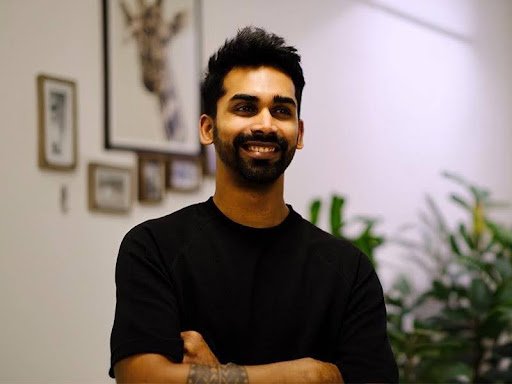
For as long as he can remember, Ankit Rao has heard the same advice: “You think too much.“
Teachers said it. Friends said it. Colleagues said it. Like many people with active minds, he grew up believing that overthinking was something he needed to overcome.
Today, however, the Singapore-based technology leader and author sees it differently.
In his debut book, Overthinking Is My Best Friend, Rao challenges a belief that has become almost universal—that overthinking is always a weakness. While he acknowledges that excessive worry can be harmful, he argues that thoughtful reflection, when understood properly, can also be one of our greatest strengths.
The Cost of Treating Reflection as a Weakness
We live in a culture that celebrates quick decisions, confidence, and certainty. People are encouraged to trust their instincts, move fast, and avoid getting stuck in their thoughts.
As a result, anyone who spends extra time reflecting, questioning, or analyzing often receives the same label: overthinker.
For Rao, that label never fully captured the whole story.
Over the years, he noticed that many of the qualities people admired in successful individuals—self-awareness, careful decision-making, curiosity, and emotional intelligence—often came from the same place. They came from people who took time to think.
“The problem isn’t that we think too much,” Rao believes. “The problem is that we’ve started treating every deep thought as a flaw.“
Why Uncertainty Rewards Thoughtful Minds
As a leader in the technology industry, Rao regularly works with uncertainty.
Important decisions rarely come with complete information. Teams face competing priorities, changing circumstances, and difficult choices that have no obvious answer.
In those situations, thoughtful reflection becomes an advantage.
The ability to examine different possibilities, question assumptions, and consider consequences can often prevent mistakes and lead to better outcomes.
This does not mean every mental spiral is productive. But it does suggest that not all overthinking deserves the negative reputation it has earned.
Sometimes, thinking deeply is simply another form of preparation.
The Questions That Followed Him Into Adulthood
Like many people raised in Indian households, Rao grew up surrounded by expectations about education, career choices, and future success.
Those expectations often created questions that stayed with him long after childhood.
Why did certain experiences linger in his mind?
Why did some decisions feel impossible to stop analyzing?
Why did he keep returning to the same thoughts and concerns?
Instead of pushing those questions away, he became curious about them. That curiosity eventually became the foundation for his book.
What Most Discussions About Overthinking Miss
Unlike many books in the personal growth category, Overthinking Is My Best Friend does not promise to eliminate anxiety or silence the mind.
Instead, it invites readers to understand their thoughts with greater honesty and compassion.
Through stories about work, relationships, identity, travel, and everyday life, Rao shares what it feels like to live with a mind that rarely slows down—and what can happen when you stop treating that mind as an enemy.
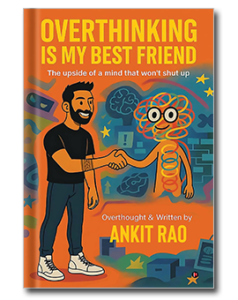
The result is less a self-help manual and more a conversation with readers who have spent years wondering if there is something wrong with the way they think.
The Quiet Strength Behind Self-Awareness
At its core, Rao’s message is simple.
Many of the people who think deeply are also the people who care deeply. They reflect on their actions. They learn from mistakes. They seek understanding rather than certainty.
While overthinking can sometimes become a burden, it can also be the source of insight, empathy, and self-awareness.
Perhaps the goal isn’t to silence every thought.
Perhaps the goal is learning which thoughts deserve our attention.
And perhaps, as Ankit Rao suggests, overthinking isn’t always a weakness waiting to be fixed.
It may be one of the most misunderstood human strengths.