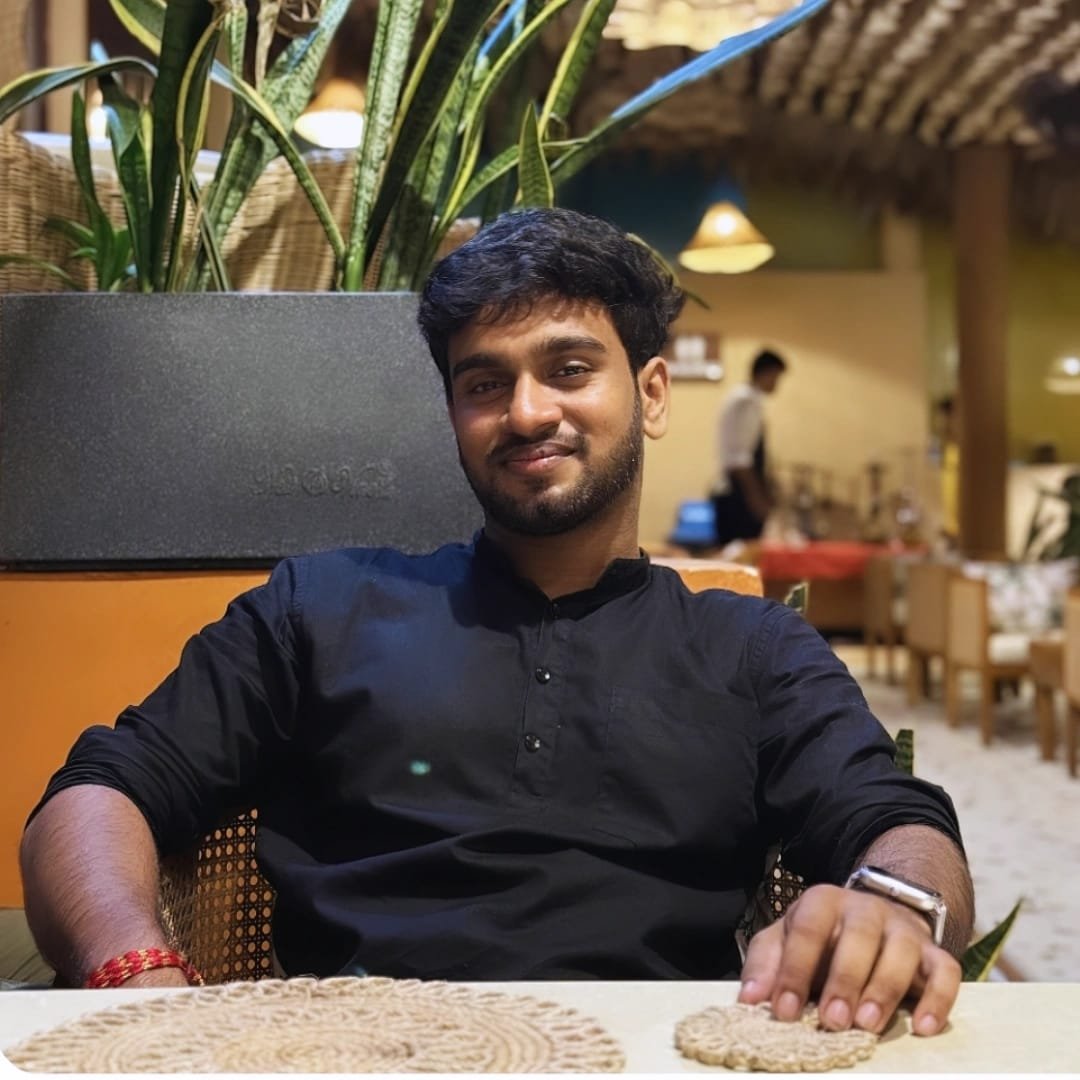
At 26, Vaibhav Vithuray Naik has built cancer-care AI, a multilingual student platform, and a grassroots movement all rooted in one belief: technology must serve every human, not just the privileged few.
There is a particular kind of hunger that grows in a child who watches a second-hand computer come alive for the very first time. For Vaibhav Vithuray Naik, that moment
arrived in the seventh standard when his father Vithuray Rama Naik despite financial instability at home placed a ₹2,000 machine in front of him as a gift. That aging device, modest by any measure, became the launchpad for a mission that is today reshaping how thousands of Indians engage with artificial intelligence.
“Technology was meant for the betterment of humankind, and it will be. I don’t want people to lose simply because they were not aware this technology existed.”
—Vaibhav Vithuray Naik
The Origin
From a cyber café counter to the cutting edge
To fund his own education, a young Vaibhav took on part-time work at a local cyber caféin Goa. Most teenagers would have treated it as a chore. Vaibhav treated it as a classroom. Between helping customers log in and print documents, he quietly absorbed everything around him how hardware was stripped apart and reassembled, how software modules were diagnosed and reset. He was not assigned these tasks. He simply watched, asked questions, and learned.
That self-taught instinct for technology, combined with a formal education in Film Science, gave Vaibhav something rare in the technology world: the ability to think like an engineer and communicate like a storyteller. While most technologists speak in code, Vaibhav speaks in narratives and that distinction, he believes, is what makes AI truly accessible to the people who need it most.
His Work
Two platforms, one purpose
EncoEase
An AI-powered digital support platform for cancer patients and caregivers bringing compassionate, intelligent guidance to families navigating one of life’s hardest journeys.
AcaryaX
An AI-powered multilingual learning platform built for students who struggle with English making quality education accessible across languages and geographies.
Both platforms carry the same fingerprint: they are built not for the already-empowered, but for the overlooked. EncoEase addresses the quiet desperation of a cancer caregiver who does not know where to turn at 2 a.m. AcaryaX addresses the silent shame of a brilliant student who cannot access knowledge locked behind a language barrier. In both cases, Vaibhav’s instinct was not to build a product it was to solve a human problem.
he Mission
Taking AI literacy across India
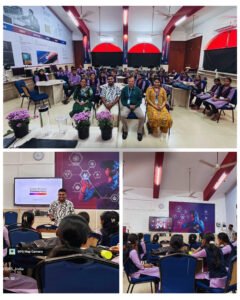
Today, Vaibhav is one of the most recognised names in the technology communities of Goa and Maharashtra. But recognition was never the goal. He is on the road conducting AI literacy workshops across India, walking into classrooms, community halls, and colleges, and making a simple, urgent argument: you do not need to be a programmer to understand AI, but you cannot afford to remain ignorant of it.
His workshops are distinct in style. Where conventional tech talks lean on jargon and slides, Vaibhav draws on his film science background to craft experiences visual, emotional, and grounded in the real lives of his audience.
Human creativity first, technology second
What separates Vaibhav from a generation of ambitious young founders is a philosophical clarity that runs through everything he builds and teaches. He does not believe that technology is the hero of this story. He believes humans are and that technology, wielded with creativity and empathy, is simply the most powerful tool humans have ever held.
His film training is not incidental to this view. Cinema, at its core, is the art of making people feel something of reaching across language, class, and background to create shared understanding. Vaibhav brings exactly that impulse to AI education. His goal is not to produce engineers. His goal is to produce informed citizens people who can look at a world being remade by artificial intelligence and understand enough to shape it, rather than simply be shaped by it.
From a ₹2,000 second-hand computer in a small Goan home to AI workshops echoing across India Vaibhav Vithuray Naik’s story is proof that the most transformative journeys rarely begin with resources. They begin with curiosity, sustained by purpose, and made powerful by the refusal to believe that the future belongs only to some.