To much of the world, Dubai is a symbol of ambition, growth, and opportunity. Its skyline, luxury developments, and economic achievements have made it one of the most recognizable cities in the world.
But beyond the skyscrapers and success stories lies another side of Dubai—one built by millions of migrant workers, professionals, entrepreneurs, and families who left their homes in search of a better future.
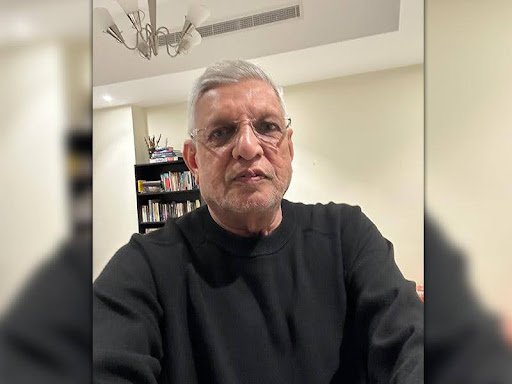
Few writers have observed these lives as closely as Shahul Valapattanam.
Having lived and worked in Dubai for more than four decades, the Kerala-born author has spent years documenting the experiences of people who live between home and away, carrying their memories, responsibilities, and aspirations across borders. Through his novels and short stories, he presents a version of Dubai that is rarely seen in business headlines or travel campaigns: a city shaped by human stories.
The Community That Shaped His Stories
Born in Kerala’s Kannur district in 1953, Shahul began writing at an early age and published his first short story when he was just thirteen.
His move to Dubai marked an important chapter in both his life and literary career. Like many Malayalis who travelled to the Gulf in search of opportunities, he experienced life far from home while remaining closely connected to his roots.
Over the years, he witnessed the experiences of multiple generations of Gulf Malayalis. He saw people arrive with dreams of financial security, families separated by distance, friendships built across cultures, and communities shaped by shared experiences.
These observations became a rich source of inspiration for his writing and helped shape a literary career that now spans six novels and seven short story collections.
The People Behind the Migration Story
Migration is often discussed through employment figures, remittances, and economic impact.
Yet every migration story begins with a person.
A parent working abroad to support family members back home. A professional trying to build a career in an unfamiliar environment. A business owner taking risks in pursuit of stability. A family learning to adapt to life between cultures.
These are the individuals who populate Shahul’s stories.
His characters are not defined by statistics or stereotypes. They are ordinary people navigating responsibilities, ambitions, disappointments, and hopes. By focusing on their experiences, Shahul brings a human perspective to conversations that are often dominated by economics.
When Home Exists in Two Places
A recurring theme throughout Shahul’s writing is the experience of belonging to more than one place.
For many migrants, home never fully disappears. Family ties, traditions, memories, and responsibilities continue to influence everyday life regardless of where they live. At the same time, years spent abroad create new identities, relationships, and routines.
This creates a unique emotional reality—one that combines opportunity with sacrifice and belonging with distance.
Shahul captures these tensions with authenticity and empathy. His characters often find themselves balancing the demands of the present while remaining connected to the past.
It is this emotional complexity that gives his work much of its depth.
The Unseen Pressures Behind Prosperity
These themes continue in Shahul’s latest novel, “DIRHAM”.
Set in Dubai during a period of economic uncertainty, the novel follows individuals whose lives begin to change as financial pressures expose hidden vulnerabilities. Through their experiences, Shahul examines questions of identity, dignity, resilience, and the true meaning of success.
While Dubai is often associated with prosperity, “DIRHAM” reminds readers that every success story carries unseen challenges.
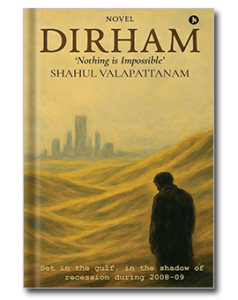
The novel presents a city filled not only with opportunity but also with people confronting uncertainty, expectations, and personal struggles.
In doing so, it offers a more complete and human portrait of life in the Gulf.
The Stories Future Generations Need to Hear
Beyond entertainment, literature can serve as an important record of lived experience.
For decades, Gulf Malayalis have played a significant role in shaping both the Gulf region and Kerala. Yet many of their personal experiences remain absent from official histories.
Shahul’s work helps preserve these stories.
His novels and short story collections document the realities of migration, adaptation, family separation, ambition, and community life. They capture moments and memories that might otherwise be forgotten.
For older readers, these stories often feel familiar. For younger generations, they provide valuable insight into the lives and sacrifices of those who came before them.
The Writer Behind Dubai’s Untold Stories
In a world where cities are often measured by economic success and physical growth, Shahul Valapattanam continues to focus on the people who make those cities possible.
His writing reminds readers that behind every skyline are individuals carrying dreams, responsibilities, fears, and aspirations. Through decades of observation and storytelling, he has documented a side of Dubai that is rarely visible from a distance.
As the city continues to grow and transform, Shahul’s work remains an important literary record of the migrant experiences that helped shape it.
By looking beyond the skyline, he reveals a Dubai defined not only by buildings and ambition, but by the human stories at its heart.