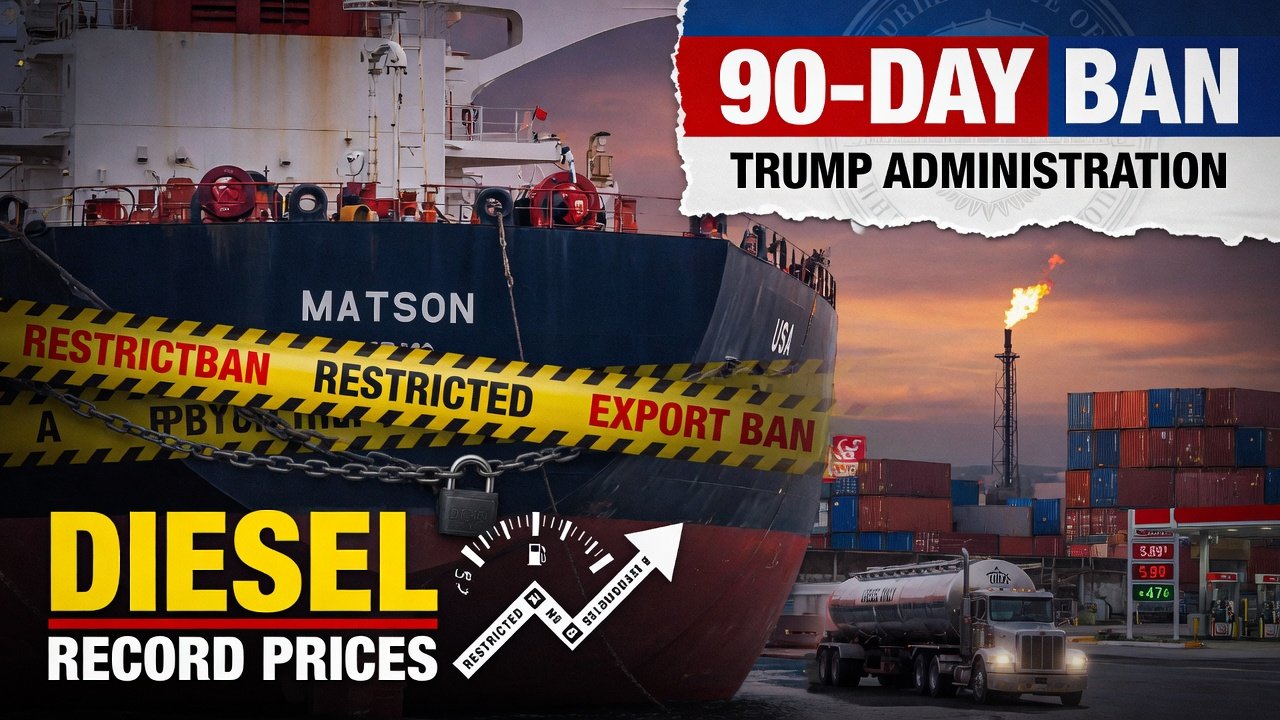
US Diesel Export Ban: Trump Administration Weighs 90-Day Restriction Amid Record Fuel Prices
The US diesel export ban debate has intensified as the Trump administration considers ways to bring down sharply higher domestic fuel prices. Reports initially said the administration was preparing a 90-day ban on diesel exports, but the White House subsequently denied that a flat 90-day ban was being prepared. More recent comments from President Donald Trump indicate that he is still seriously considering restrictions on diesel exports.
The issue has emerged as U.S. diesel prices have climbed above $6.50 per gallon, putting pressure on farmers, truckers and other businesses that rely heavily on diesel fuel.
Trump Administration Examines Diesel Export Restrictions
The proposal gained attention after reports that the administration was considering a temporary 90-day restriction on diesel exports.
A Reuters report citing Politico said the administration was preparing such a plan, with five people familiar with the discussions cited by Politico. Reuters said it could not independently verify the report at the time.
However, the White House later denied that it was preparing a flat 90-day ban. Energy Secretary Chris Wright said the administration was instead examining ways to increase the amount of diesel available domestically while maintaining supplies of gasoline and jet fuel.
The distinction is important because the policy under discussion has evolved from a reported outright export ban toward possible restrictions or voluntary measures.
Trump Says Diesel Restrictions Are Being Considered
President Trump has publicly indicated that restricting diesel exports is among the options being examined.
Trump said he had called for limiting diesel exports and argued that keeping more domestically produced diesel in the United States could help address high fuel prices. Treasury Secretary Scott Bessent also confirmed that officials were examining whether a full or partial restriction would be feasible given the country’s refining capacity.
More recent reporting indicates that Trump continues to consider a diesel export ban, while the administration is also examining alternative measures, including broader use of tax-exempt red-dyed diesel and voluntary export limits.
Why Are US Diesel Prices So High?
U.S. diesel prices have reached record levels amid disruptions in global energy markets.
According to Reuters, average U.S. diesel prices were around $6.52 per gallon when the export-ban proposal emerged. The rise has been linked to disruptions caused by conflicts involving Iran and Ukraine, which have affected international supplies of oil and refined petroleum products.
Diesel is particularly important to the U.S. economy because it powers much of the nation’s trucking, agriculture, construction and freight transportation activity.
Higher diesel costs can therefore affect the price of moving goods and operating agricultural equipment, potentially adding to broader inflationary pressures.
Oil Industry Raises Concerns
The proposed restrictions have faced resistance from parts of the U.S. oil and refining industry.
Energy Secretary Chris Wright has argued that a straightforward export ban could have unintended consequences, including putting pressure on gasoline and jet-fuel supplies. The refining process produces multiple petroleum products, meaning refiners cannot necessarily reduce diesel exports without affecting production decisions for other fuels.
Industry representatives have also warned that restricting access to international markets could reduce refinery output if refiners become less able to sell their production profitably.
The Transportation Topics report said industry officials had warned that export restrictions could provide limited short-term relief while potentially reducing refinery output and creating higher fuel costs later.
Could a Diesel Export Ban Lower US Prices?
The potential effect on domestic diesel prices remains disputed.
Supporters of restrictions argue that redirecting diesel currently destined for overseas markets toward U.S. consumers could increase domestic supply and ease prices in the short term.
However, analysts have highlighted a different potential effect. If U.S. refiners reduce production because they lose access to export markets, the initial increase in domestic supply could eventually be offset by lower refinery output.
Goldman Sachs analysts estimated that an immediate export restriction could initially reduce gasoline prices by around 25 cents per gallon, but warned that refinery and storage constraints could eventually reverse some of those benefits.
The analysis illustrates why the administration is also considering alternatives to a complete export prohibition.
Potential Impact on Gasoline and Jet Fuel
One of the major concerns surrounding an export restriction is its impact on other refined fuels.
U.S. refineries produce gasoline, diesel and jet fuel from crude oil through interconnected processes. A policy designed to increase domestic diesel availability could therefore influence production economics across the wider fuel market.
Energy Secretary Wright has specifically warned that a diesel export ban could potentially increase gasoline and jet-fuel prices.
This has become a key consideration for policymakers weighing the immediate benefits of additional diesel supply against possible effects on other fuel markets.
Global Diesel Market Could Also Be Affected
The United States is a major exporter of refined petroleum products, making any significant change to its diesel exports relevant beyond its domestic market.
A reduction in U.S. diesel exports could tighten supplies in regions that rely on American fuel shipments. The Indian Express reported that analysts expect an export restriction could add pressure to already constrained global diesel markets.
Europe and Latin American markets could be among those affected because U.S. refiners are important suppliers of refined fuel to international customers.
A prolonged restriction could therefore change global trade flows as buyers seek alternative sources.
Administration Considers Alternatives
The White House is not relying solely on an export ban.
Reuters reported on September 28 that the administration was considering regulatory changes that could allow wider use of red-dyed diesel, which is normally reserved for off-road uses such as farming and is generally exempt from most federal fuel taxes.
Energy Secretary Wright has also contacted major refiners about possible voluntary limits on exports, rather than imposing a mandatory nationwide prohibition.
Other proposals have included fuel-tax relief and measures targeted at farmers and truckers facing elevated operating costs.
Oil Industry and Government Face Different Priorities
The debate reflects different priorities within the U.S. energy sector.
The administration is seeking ways to increase domestic fuel availability and reduce the financial pressure created by high diesel prices. Refiners, meanwhile, have an economic incentive to sell products into both domestic and international markets.
A mandatory restriction could change those incentives and affect refinery utilization, inventories and international fuel flows.
That is why officials are examining whether a complete ban, partial restriction or voluntary arrangement would have different effects on the domestic market.
What Happens Next?
As of September 29, no nationwide 90-day diesel export ban has been formally announced. The White House previously denied that such a flat ban was being prepared, while Trump has continued to indicate that export restrictions remain under consideration.
The administration is therefore weighing several possible approaches, including export restrictions, voluntary limits, tax-related relief and measures aimed at increasing domestic diesel availability.
The final policy could have implications for U.S. fuel prices, refinery production, gasoline and jet-fuel supplies and international diesel markets.
Key Highlights
- The Trump administration is considering measures to address record-high U.S. diesel prices.
- Reports initially said officials were preparing a 90-day diesel export ban.
- The White House subsequently denied that a flat 90-day ban was being prepared.
- President Trump has continued to say that diesel export restrictions are being seriously considered.
- U.S. diesel prices have risen above $6.50 per gallon.
- Energy Secretary Chris Wright has favored exploring alternatives, including voluntary restrictions.
- Oil-industry representatives have warned about potential effects on refinery production and other fuel supplies.
- Analysts say an export restriction could initially increase domestic diesel availability but could also create longer-term supply problems.
- The policy could affect global diesel markets, particularly major U.S. fuel-importing regions.
Frequently Asked Questions
1. Is the US imposing a diesel export ban?
No nationwide 90-day ban has been formally announced. The White House denied an earlier report that such a ban was being prepared, although President Trump has continued to consider restrictions on diesel exports.
2. What is the proposed 90-day diesel export ban?
The reported proposal would temporarily prevent U.S. companies from exporting diesel fuel for approximately 90 days, redirecting more supply toward the domestic market.
3. Why is the Trump administration considering restrictions?
The main stated objective is to increase domestic diesel availability and address record-high fuel prices affecting consumers and businesses.
4. How high are U.S. diesel prices?
U.S. diesel prices have risen above $6.50 per gallon, reaching record levels as global fuel supplies have been disrupted.
5. What does the oil industry think about the proposal?
Oil and refining companies have raised concerns that export restrictions could reduce refinery production and potentially create shortages or higher prices for other petroleum products.
6. Could a diesel export ban reduce fuel prices?
It could increase domestic diesel availability initially, but analysts have warned that lower refinery output and storage constraints could offset or reverse some of the initial price benefit.
7. Could gasoline prices increase?
Energy Secretary Chris Wright has warned that a diesel export ban could potentially increase gasoline and jet-fuel prices because of the interconnected nature of refinery production.
8. Would other countries be affected?
Yes. The United States is a major diesel exporter, so a significant reduction in exports could tighten supplies in international markets and force buyers to seek alternative sources.
9. What alternatives is the administration considering?
Options include voluntary export limits, broader use of red-dyed diesel and other measures aimed at increasing domestic fuel availability or reducing costs.
10. When could a final decision be made?
There was no confirmed implementation date as of September 29, 2026. The administration was continuing to evaluate different approaches to addressing elevated diesel prices.