For many people, the Bhagavad Gita is one of the most respected books in the world. Yet it is also one of the most misunderstood. Some people believe it is meant only for scholars or spiritual teachers. Others feel its language and ideas are too difficult for ordinary readers. Author Dinesh Narain Verma believes this common belief has kept many people away from a book that was meant to guide everyday life.
With his latest book, Understanding Bhagavad Gita: The Recipe for a Better Life, Verma hopes to change that. His aim is simple: to help readers understand the Gita without feeling overwhelmed by difficult language or complicated explanations.
Why So Many People Never Read the Bhagavad Gita
During his years in public service, law, and later as a writer, Verma met people from many different backgrounds. He noticed that many wanted to read the Bhagavad Gita but often postponed it because they believed they would struggle to understand it.
This inspired him to write a book that explains its teachings in plain language. Instead of filling the pages with complex discussions, he focuses on helping readers understand the main ideas and see how they relate to daily life.
For Verma, the Bhagavad Gita should not feel distant or difficult. He believes its message belongs to every reader who wants to live with greater clarity and purpose.
A Simpler Path to Understanding the Bhagavad Gita
Understanding Bhagavad Gita: The Recipe for a Better Life is written with ordinary readers in mind. It does not expect readers to have a background in philosophy or religious studies. Instead, it explains important ideas step by step in a clear and simple way.
The book talks about values such as self-control, kindness, honesty, humility, compassion, and balanced thinking. Rather than presenting these as abstract ideas, Verma explains how they can help people make better decisions, deal with difficult situations, and build healthier relationships.
He also points to an important lesson from the Mahabharata. Before the great war began, Lord Krishna made every effort to bring peace between the two sides. Only after every peaceful option had failed did war become unavoidable. Verma believes this message is still meaningful because it teaches people to seek peace first while also having the courage to stand for what is right.
Timeless Ideas for Everyday Challenges
Although the Bhagavad Gita was written thousands of years ago, many of the challenges it speaks about remain part of modern life. People continue to face stress, uncertainty, conflict, and difficult choices.
Verma believes this is why the Gita continues to matter. Its teachings encourage people to stay calm during difficult times, act with honesty, control their emotions, and perform their duties with sincerity. These are lessons that remain useful across generations.
By explaining these ideas in simple language, he hopes readers will see the Bhagavad Gita as a practical guide rather than a book that feels difficult to approach.
How His Earlier Books Led to This One
Readers familiar with Verma’s earlier books will notice a common theme running through his work. His first book, My Times My Tales, drew from real-life experiences and human behaviour. His award-winning novel, A Fascinating Trip to Humans Manufacturing Site, used fantasy to examine why people often hurt one another.
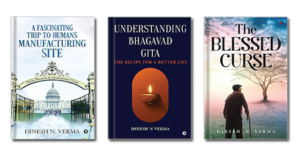
His latest book continues that interest in understanding people. This time, instead of using fiction, he turns to the wisdom of the Bhagavad Gita to help readers think about character, choices, and the values that shape everyday life.
Making an Ancient Classic Feel More Accessible
Dinesh Narain Verma believes the Bhagavad Gita was never meant to remain beyond the reach of ordinary people. Through Understanding Bhagavad Gita: The Recipe for a Better Life, he hopes to replace hesitation with confidence and encourage more readers to open a book that has guided generations.
His work reminds readers that the value of the Bhagavad Gita lies not in how difficult it appears, but in how its teachings can help people live with greater understanding, balance, and compassion.