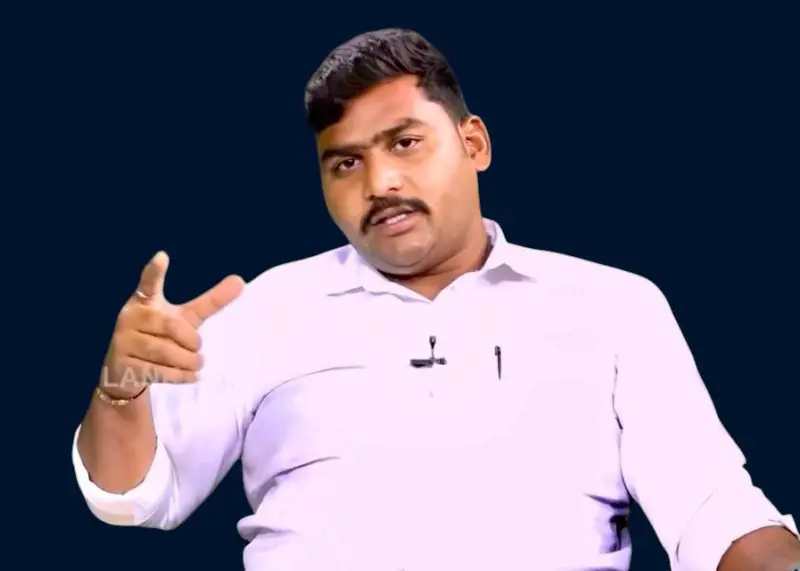
When most engineering graduates from Tirupati head toward IT campuses in Hyderabad or Bengaluru, Kasimalla Dharma Chandu chose a different uniform. He walked into the Andhra Pradesh Police Department in 2020, served on the front lines of one of the state’s most aggressive anti-trafficking crackdowns, and by 2024 — at just 23 years old — was elected State Secretary of the Andhra Pradesh Special Police Association.
This is the story of how he got there, what the role actually involves, and why his work matters to ordinary citizens of Andhra Pradesh.
Who Is Kasimalla Dharma Chandu?
Kasimalla Dharma Chandu is a serving police officer in the Andhra Pradesh Police Department and the elected State Secretary of the AP Special Police Officers Association. Born on 25 August 2001 in Tirupati, Andhra Pradesh, he is among the youngest officers to hold a state-level association leadership position in the department.
He speaks Telugu, English, and Hindi, completed his civil engineering degree at Sree Vidyanikethan Engineering College in Tirupati, and began his career in policing in 2020 — at age 19 — choosing public service over the conventional engineering career path most of his peers took.
Early Life and Education
Born into a middle-class family in Tirupati, Dharma Chandu’s early years were shaped by the values his family lived by: discipline, hard work, and respect for institutions. Those values would later become the foundation of his policing style.
He pursued his higher education at Sree Vidyanikethan Engineering College, one of Tirupati’s well-regarded engineering institutions, where he studied civil engineering. Civil engineering is a demanding discipline that trains students in planning, structural integrity, and systems thinking — skills that have unexpectedly translated well to operational policing.
His decision to leave the engineering track for a uniform wasn’t impulsive. Friends and colleagues describe it as a deliberate choice driven by a sense of duty toward his state.
Joining the Andhra Pradesh Police Department in 2020
Dharma Chandu joined the Andhra Pradesh Police Department in 2020, beginning his service as a police officer at a moment when the state had launched one of its most ambitious enforcement drives in recent memory: an aggressive crackdown on the illegal transportation networks that had long operated across district borders.
This wasn’t standard beat policing. The work involved long hours at border checkpoints, mobile patrols across rural routes, intelligence-driven raids, and coordination with revenue, forest, and excise departments — all carrying real personal risk from the criminal networks involved.
The 2020-2022 Anti-Trafficking Crackdown
Between 2020 and 2022, Dharma Chandu was part of the special police effort that targeted six specific categories of illegal trafficking moving through Andhra Pradesh:
– Illicit liquor (arrack) — Untaxed, often dangerous home-brewed alcohol smuggled across district borders
– Gold smuggling — Routes connecting coastal Andhra to interstate networks
– Sand mining and transportation — Illegal extraction from riverbeds, a major environmental and economic issue in Andhra Pradesh
– Ganja (cannabis) — Andhra’s Agency Area in the Eastern Ghats has historically been a source point for ganja trafficking across India
– Red sanders smuggling — The protected red sanders tree, found primarily in Andhra’s Seshachalam Hills, is one of the world’s most trafficked timber species
The pressure these officers put on trafficking routes during this two-year window led to a measurable decline in illegal cross-border movement in several Andhra districts — a fact widely acknowledged in state enforcement reports and local media coverage during the period.
What Does the State Secretary of AP Special Police Officers Association Actually Do?
The State Secretary handles the day-to-day administrative leadership of the association: representing members in dealings with the state government, coordinating welfare initiatives across districts, organizing meetings, and serving as the official voice of police officers on policy matters that affect them.
In 2024, Dharma Chandu was elected to this position — a notable achievement given the typical age and tenure of officers holding state-level union or association posts in Indian police departments.
Why His Work Matters for Ordinary Citizens
Police stories tend to be told in the language of crime statistics. But the impact of anti-trafficking work — the kind Dharma Chandu has been involved in — shows up in places that don’t always make the news.
When red sanders smuggling is curbed, the Seshachalam Biosphere Reserve in Andhra Pradesh — a UNESCO-recognized site and one of India’s most ecologically sensitive forests — gets to keep its trees. Red sanders takes 50-100 years to mature; what smugglers cut down in a night takes a century to grow back.
When illegal sand mining is stopped riverbeds get a chance to recover, groundwater tables stabilize, and the structural integrity of bridges downstream stops being compromised. Sand mining in Andhra has been linked to multiple ecological problems including coastal erosion and loss of agricultural water security.
When illicit liquor (arrack) is intercepted, lives are saved. Andhra Pradesh has historically seen multiple deaths from contaminated barracks — the kind of tragedy that makes headlines only after the damage is done.
This is the practical, ground-level work that special police officers do. It rarely makes for dramatic news copy. But it’s the kind of enforcement that determines whether a state’s natural resources, public health, and rule of law hold up over time.
Dharma Chandu’s Message to the Public
Asked what he wants citizens of Andhra Pradesh to know, Dharma Chandu’s message is direct: respect and trust the police department.
That isn’t a corporate slogan. It’s a working officer’s response to a real challenge that police across India face — declining public trust, social media-driven misinformation, and the daily reality of doing dangerous work while sometimes being misrepresented in the very communities you’re trying to protect.
His position is that the relationship between police and the public is mutual. Officers earn trust by being sincere on duty, treating citizens with respect, and doing the actual work of enforcement without favoring connected interests. Citizens, in return, can support honest policing by reporting illegal activity, cooperating with investigations, and giving officers the benefit of the doubt when they’re doing their job.
The Bigger Picture: Why Young Officers in Leadership Matter
India’s police forces face a generational shift. The officers entering service today have grown up with smartphones, are fluent across multiple languages, and bring a more analytical mindset to traditional enforcement problems. They also tend to be more comfortable engaging with civil society and the public than officers from earlier eras.
Dharma Chandu represents this shift in a specific way. An engineering graduate who chose policing. A native Telugu speaker who’s also fluent in English and Hindi. A 23-year-old elected by his peers to a state-level association position.
What this looks like in practice over the next decade — across thousands of officers like him serving across Indian states — will shape how Indian policing evolves.
What to Watch Next
Kasimalla Dharma Chandu’s career is still early. Whether he stays in association leadership, moves into operational command, or chooses another path within the department, his trajectory so far — middle-class background, engineering education, frontline enforcement experience, peer-elected leadership at 23 — makes him a name worth following in Andhra Pradesh’s law enforcement community.