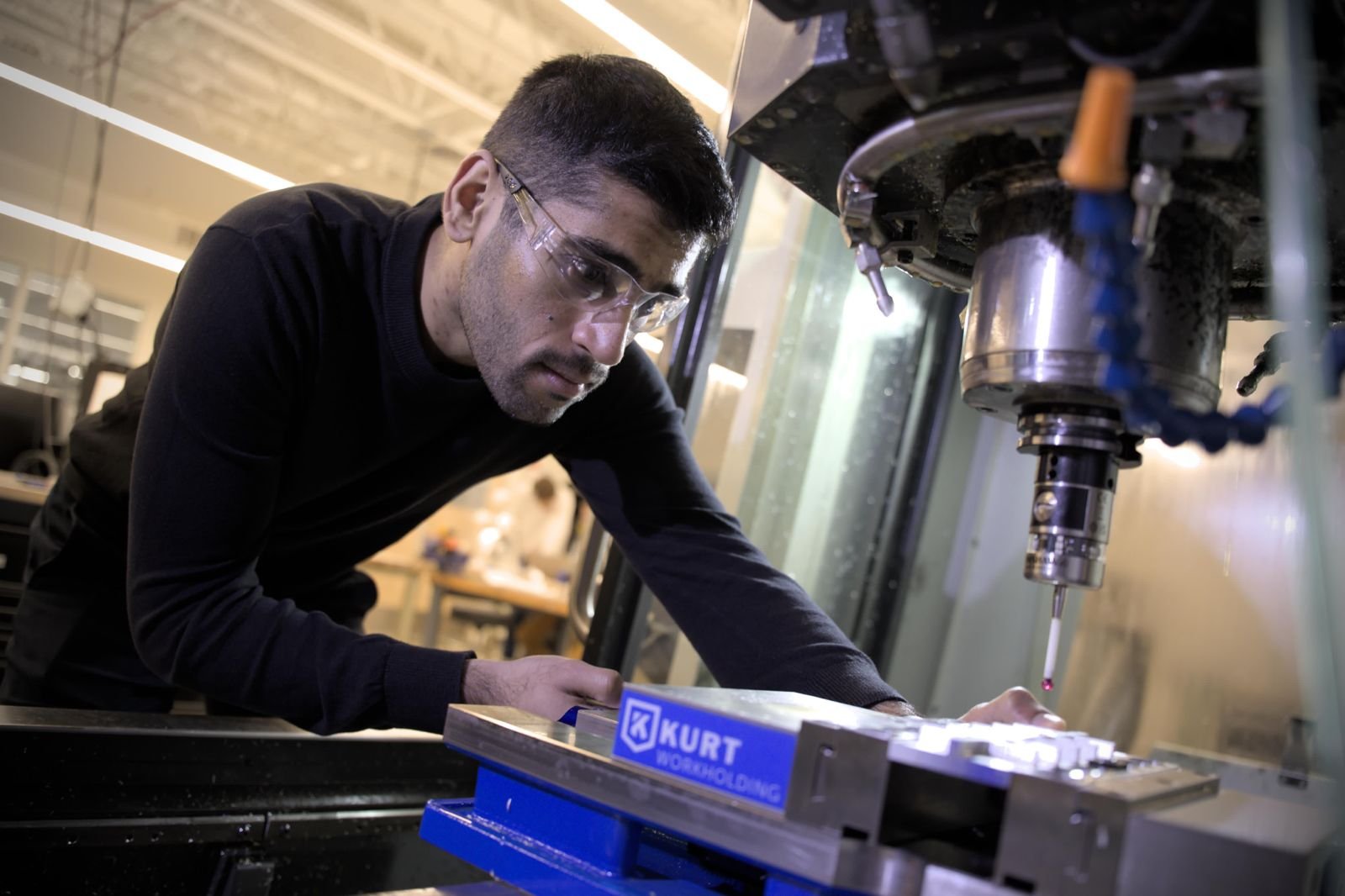
Engineering Where Design Meets Real-World Use
Across research institutions and industry facilities in the United States, automation systems increasingly shape how scientific and engineering work is conducted. These systems must function reliably within active environments—integrating with existing infrastructure, supporting human workflows, and maintaining performance outside controlled development settings. Engineers responsible for this work operate at the point where design transitions into sustained operational use.
Mechanical engineer Manan Luthra’s professional work centers on this intersection of design and deployment. Trained in robotics and autonomous systems, he has contributed to automation initiatives within U.S. federal research programs and private industry settings.
Academic Foundations in Robotics and System Integration
Luthra holds a graduate degree in Robotics and Autonomous Systems from Arizona State University, USA, where his training covered mechanical design, control systems, sensing technologies, and system integration. This multidisciplinary foundation reflects the nature of modern robotics engineering, where mechanical components, electronic systems, and software must function together within a single platform.
Robotics engineering requires more than optimizing individual components. Mechanical tolerances influence sensor alignment, control performance affects system stability, and software constraints shape physical design choices. This system-level perspective informs Luthra’s professional approach: building automation platforms that are not only technically capable but also reliable, maintainable, and adaptable to evolving operational demands.
Supporting Laboratory Automation at the National Institutes of Health
Luthra contributed to automation initiatives at the National Center for Advancing Translational Sciences (NCATS), working as a contractor through Axle Informatics, LLC within the ASPIRE Program at the National Institutes of Health. The initiative focuses on expanding laboratory automation capabilities to support more efficient preclinical drug discovery by combining automated synthetic chemistry, high-throughput biology, and advanced information technologies to explore biologically active chemical space.
Working within a federal research environment, Luthra’s responsibilities included mechanical design and prototyping, integration of robotic systems with laboratory instruments, and hands-on testing of automated platforms. Collaboration played a central role in this work. Engineers, researchers, and automation specialists worked together to ensure that robotic systems could operate reliably within active laboratory settings while meeting the needs of scientists conducting experiments.
In research environments, automation systems must balance precision with practicality. Equipment must be robust enough to operate continuously, accessible for maintenance, and safe for researchers working nearby. Luthra’s work focused on these system-level challenges, addressing how robotic motion, mechanical assemblies, sensors, and laboratory interfaces function together within a larger automation ecosystem.

Developing Deployable Systems in Industry
In addition to his work in federal research settings, Luthra has continued to apply this system-level perspective in industry through his role at Re:Build Fikst. The company focuses on engineering development and product realization for complex mechanical and robotic systems intended for real-world deployment.
At Re:Build Fikst, Luthra contributes to mechanical design, prototyping, and integration for robotics and automation projects. These efforts often involve the development of custom mechanical assemblies and robotic workcells designed to perform specialized tasks. Projects frequently require iterative testing and refinement as engineers evaluate how systems perform under practical operating conditions.
Engineering work in industrial environments often requires balancing several competing priorities. Systems must meet performance requirements while also being manufacturable, serviceable, and durable enough for sustained operation. This process often involves collaboration among mechanical engineers, controls specialists, software developers, and manufacturing teams.
Working Across Disciplines in Robotics Engineering
Across both research and industry roles, Luthra’s work reflects the interdisciplinary nature of robotics engineering. Mechanical design decisions must align with control strategies, sensor integration, and software architecture. Engineers working in this space often collaborate closely with specialists across multiple technical domains.
These roles frequently extend beyond initial design. Once systems are assembled and deployed, engineers must troubleshoot unexpected behaviors, refine system performance, and adapt designs based on real-world feedback. Hands-on testing and iterative improvement are essential parts of this process, helping ensure that robotic systems operate consistently in dynamic environments.
Enabling Reliable Automation Systems
Much of the engineering work behind robotics and automation happens outside public view, yet it plays a crucial role in determining whether systems function reliably once deployed. Engineers involved in integration and deployment readiness help ensure that automation solutions perform as intended when they move from development environments into practical use.
Through his work supporting laboratory automation initiatives at the National Institutes of Health and contributing to engineering projects at Re:Build Fikst, Luthra has been involved in developing robotic and automation systems designed for real-world application.
From research laboratories to industrial engineering teams, his professional trajectory reflects continued engagement with robotics engineering at the point where technical design translates into operational performance.