Millions risk losing ACA coverage, potentially increasing premiums for everyone else as enhanced federal subsidies that helped make health insurance more affordable have officially expired. Health policy experts warn that the shift could reshape the Affordable Care Act (ACA) marketplace in 2026, pushing many consumers out of coverage and driving up costs for those who remain.
Premiums Surge After Enhanced Subsidies End
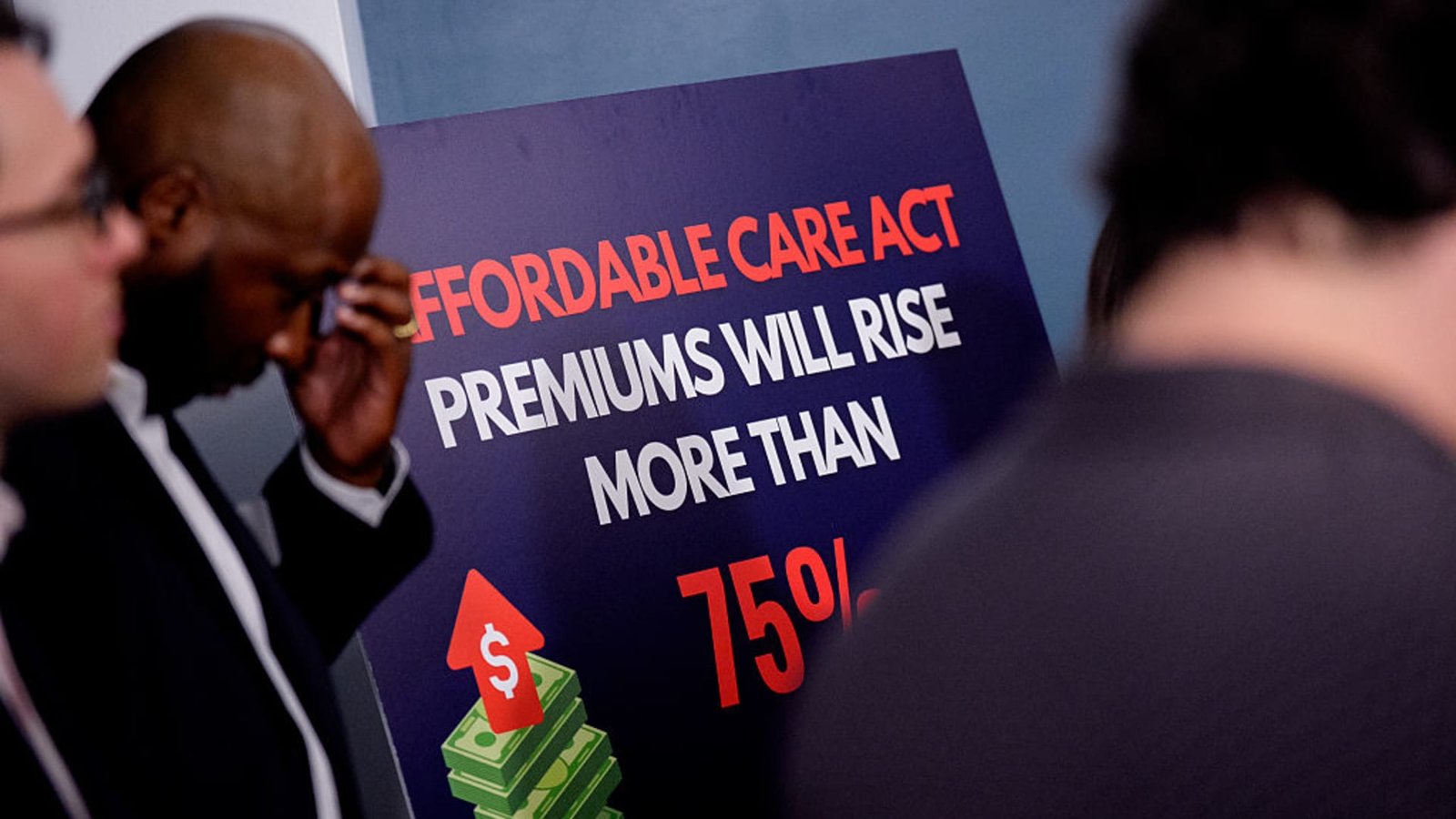
With the expiration of enhanced premium tax credits at the end of 2025, many Americans who buy insurance through the ACA marketplace are seeing sharp increases in what they pay each month. Estimates from KFF, a nonpartisan health policy research group, show that the average monthly premium for subsidy recipients more than doubled — rising to about $1,904 in 2026 from $888 the year before.
Higher costs are expected to prompt many people to drop their coverage altogether, especially those who feel relatively healthy and don’t anticipate needing frequent medical care.
Younger, Healthier Consumers Most Likely to Exit
Economists say young and generally healthy individuals are the most likely to walk away when premiums climb too high. If they decide coverage is no longer worth the cost, their exit could significantly change the makeup of the insurance pool.
As younger enrollees leave, the remaining group tends to be older and sicker — people who are more likely to need expensive care. That shift can push insurers to raise premiums even further to cover higher claims, potentially creating a self-reinforcing cycle of rising prices and declining enrollment.
“If these relatively young, healthy individuals exit the risk pool, average health care costs rise, which then drives premiums even higher,” said Meredith Rosenthal, chair of the Department of Health Policy and Management at Harvard’s T.H. Chan School of Public Health. “The concern is that this process can spiral, leading to even more people dropping coverage.”
Millions Expected to Leave the ACA Marketplace
In 2025, roughly 22 million Americans benefited from enhanced ACA subsidies. Looking ahead, analysts expect a substantial drop-off.
According to a joint analysis by the Urban Institute and The Commonwealth Fund, about 7.3 million people are projected to leave the ACA marketplace in 2026 due to the loss of enhanced subsidies. Of those, around 5 million are expected to become uninsured rather than seek coverage elsewhere.
Young adults are likely to make up the largest share of that increase. Nearly half of the projected rise in uninsured Americans — about 2.3 million people — are between the ages of 19 and 34. By comparison, only about 500,000 of those expected to lose coverage are ages 55 to 64.
“It really comes down to who feels they truly need health insurance,” said Emma Wager, a senior ACA policy analyst at KFF.
Insurers Anticipate a Riskier Enrollment Pool
Insurers appear to be bracing for these changes. KFF estimates that insurers raised gross premiums for 2026 by an average of 26%, reflecting both consumer costs and the portion covered by tax credits.
Insurers told state regulators that about four percentage points of that increase is directly tied to expectations that healthier people would drop coverage once enhanced subsidies expired. The remainder reflects broader health care cost pressures, including higher labor expenses, consolidation among providers, and the introduction of costly new specialty drugs.
More detailed enrollment data, including who dropped coverage and why, is expected to be released later this summer.
Why a Full “Death Spiral” May Be Unlikely
Despite the concerns, some experts caution against assuming the ACA marketplace is headed for a true “death spiral.”
The end of enhanced subsidies represents a significant but one-time shock, not an ongoing erosion of support, said Michael Gusmano, a health policy professor at Lehigh University. While prices may rise and enrollment may fall, that alone doesn’t guarantee a collapse of the system.
Another stabilizing factor is the structure of ACA tax credits. Even without enhanced subsidies, standard premium tax credits — in place since 2014 — still cap how much qualifying households must pay for premiums based on income.
Today, out-of-pocket premiums are generally limited to about 10% of annual income for eligible consumers, with lower-income households paying closer to 2%. These caps help shield many enrollees from the full impact of rising premiums.
“When premiums go up, most of that increase is absorbed through higher government subsidies rather than higher consumer payments,” said John Graves, a professor of health policy and medicine at Vanderbilt University. As a result, the marketplace can remain relatively stable even with fewer enrollees.
Who Is Least Likely to Re-Enroll?
Beyond younger adults, people earning too much to qualify for premium tax credits are also expected to drop coverage at higher rates. These individuals earn more than 400% of the federal poverty level — about $62,600 for a single person.
Many of these households previously qualified for enhanced subsidies and now face the full cost of coverage. Estimates suggest their average annual premium jumped to roughly $8,500 in 2026, up from about $4,400 in 2025.
In 2025, nearly 725,000 ACA enrollees — about 3% of the total — earned between 400% and 500% of the federal poverty level, according to federal data analyzed by the Bipartisan Policy Center.
What Could Truly Trigger a Death Spiral?
Policy experts say a more serious risk would come from restructuring subsidies altogether. Some Republican lawmakers and former President Donald Trump have floated the idea of replacing income-based subsidies with fixed-dollar payments.
Under that model, consumers — not the federal government — would absorb the full impact of premium hikes. That shift would make coverage far less affordable for many households and significantly increase the risk of a death spiral.
“The more money you take away from subsidies, the greater the chance the market unravels,” said Gerard Anderson, a professor at Johns Hopkins Bloomberg School of Public Health.
For now, while millions may lose coverage and premiums may rise, most experts agree the ACA marketplace is likely to remain intact — though under growing financial strain.