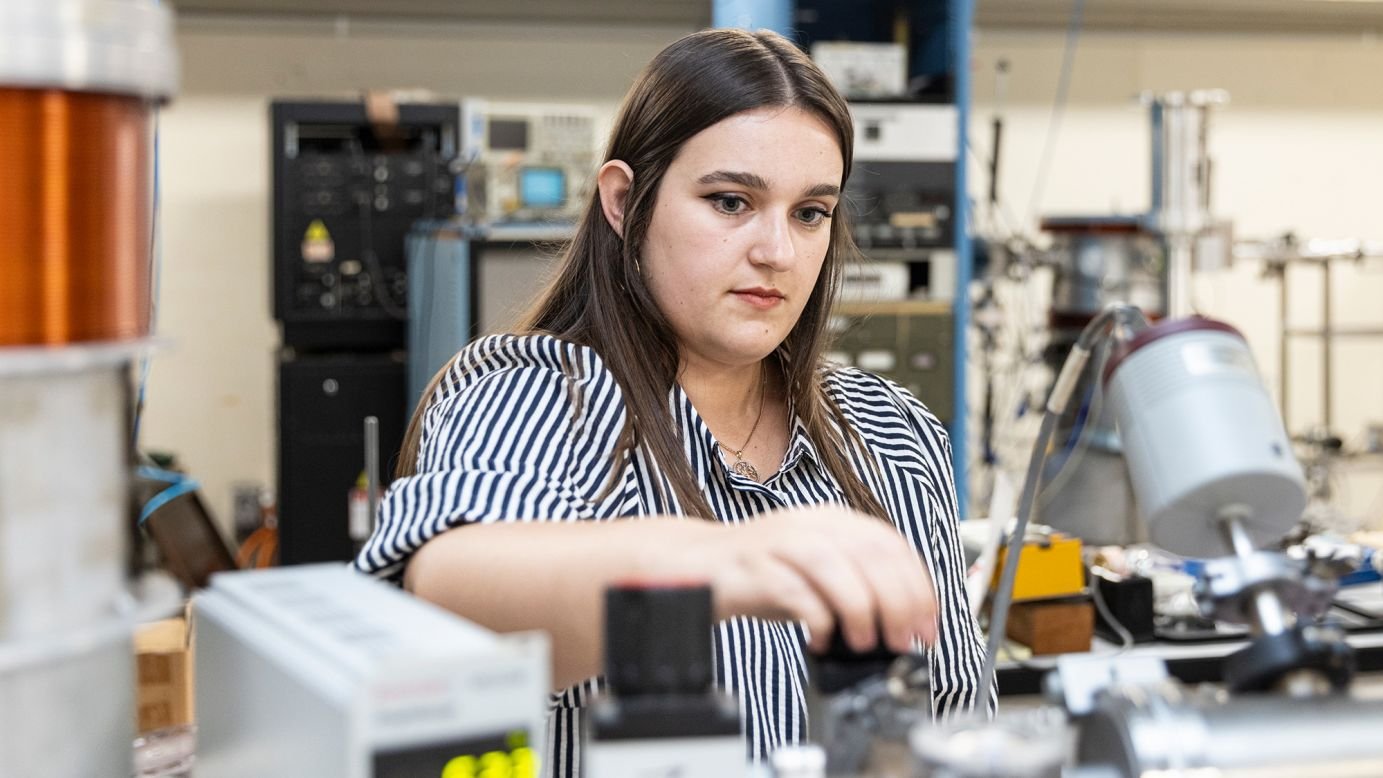
A student recreates cosmic dust in the laboratory, offering new clues about the origins of life — a breakthrough that sounds like science fiction but is now a reality. Linda Losurdo, a doctoral researcher in materials and plasma physics at the University of Sydney, has successfully simulated a tiny piece of the universe inside a laboratory, opening new pathways to understand how life may have begun.
Turning Gas and Electricity into “Stardust”
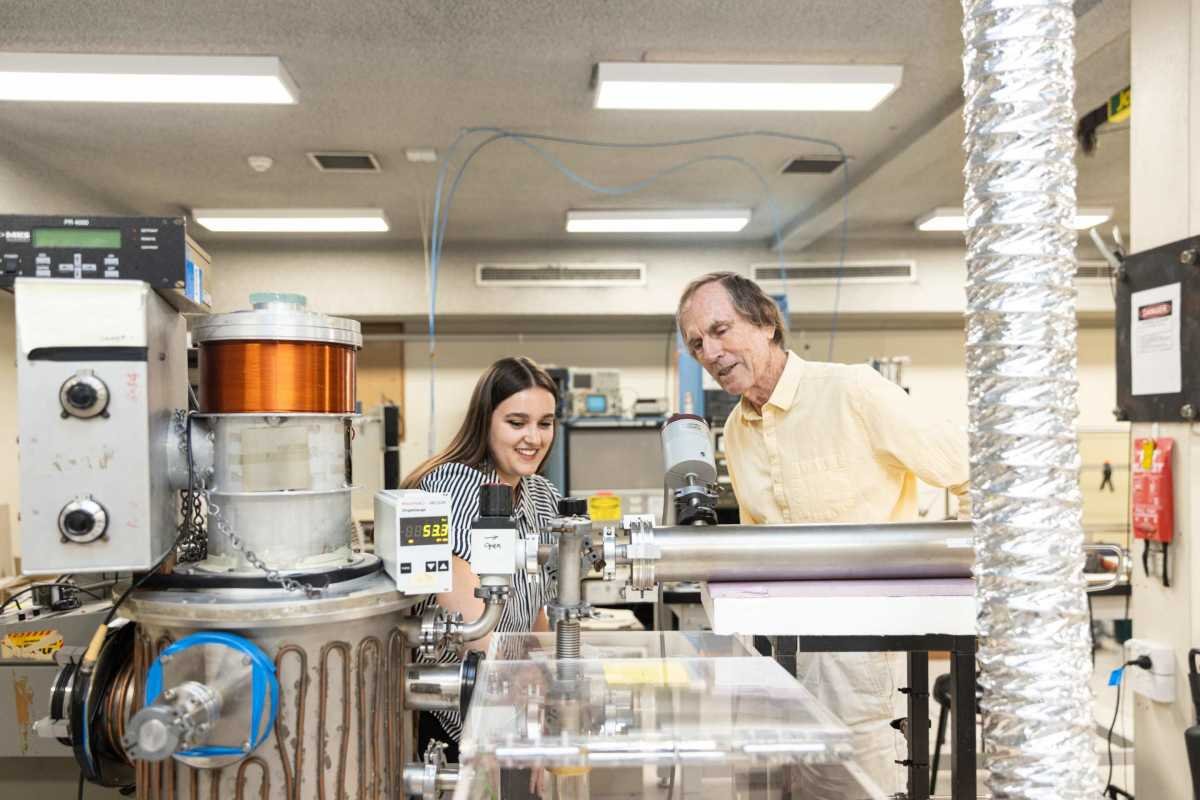
Losurdo reproduced the extreme conditions found near stars and supernovas using simple gases and high-voltage electricity. By combining nitrogen, carbon dioxide, and acetylene inside a vacuum-sealed glass tube and applying about 10,000 volts of power, she created a glowing plasma — an energized environment similar to those found in space.
Within this charged atmosphere, particles began to bond and cluster naturally, forming microscopic grains known as dusty nanoparticles — a laboratory-made version of cosmic dust.
Because these particles are incredibly small and difficult to collect, the dust was allowed to settle onto a silicon wafer, making it easier to analyze without interference.
Why Cosmic Dust Matters
Cosmic dust plays a vital role in the universe. It helps form stars and serves as a chemical surface where organic molecules — the basic ingredients of life — can develop. These particles exist throughout interstellar space and are also found in comets and asteroids.
However, studying real cosmic dust on Earth is challenging. Most incoming material burns up in the atmosphere, and the few meteorites that survive are rare and difficult to locate. By creating a laboratory version, scientists now have a reliable way to examine these materials more closely.
Losurdo hopes this research will help answer a fundamental question: Did the essential components of life, such as carbon and amino acids, originate on Earth, or were they delivered from space?
Tracing the Origins of Life’s Chemistry
Amino acids — the molecules that form proteins and support nearly all biological processes — appeared very early in Earth’s history. Researchers still debate whether they formed here or arrived from cosmic sources.
Laboratory-made cosmic dust provides a powerful tool to explore this mystery. Unlike meteorites, which are altered by long journeys and exposure to different environments, artificial dust represents a more pristine version of the material as it might exist shortly after forming near stars.
This allows scientists to study how cosmic dust evolves over time and how it may contribute to the creation of complex organic molecules.
Building a Cosmic Dust Library
The research team’s next goal is to experiment with different gas mixtures and environmental conditions to produce a variety of dust types. Over time, this work could create a comprehensive database that helps scientists match laboratory samples to real cosmic materials found in meteorites, comets, or interstellar clouds.
Although laboratory conditions can never fully replicate the complexity of space, the aim is to simulate realistic environments such as stellar envelopes, nebulae, or supernova remnants.
A Small Experiment with Big Implications
Experts not involved in the study have praised the approach. Researchers note that cosmic chemistry likely evolved from very simple molecules — hydrogen, water, carbon monoxide — reacting on dust grains. Controlled laboratory experiments like this help recreate those processes and connect observations from telescopes with physical samples.
The findings also support an exciting possibility: complex organic material may form easily in energetic stellar environments and could be widespread across the galaxy. If true, the chemical ingredients needed for life may not be unique to our solar system.
By bridging the gap between space observations and hands-on experiments, this research provides a crucial step toward understanding how the universe may have prepared the raw materials for life — and whether similar conditions exist on countless other worlds.